How to Play Head Shoulders Knee Cup Game
If you’ve ever been to a youth group night, school camp, birthday party, or even a slightly chaotic family gathering, there’s a good chance you’ve seen (or heard) the Head, Shoulders, Knees, Cup game in action. It’s loud. It’s fast. It’s competitive. And somehow, it never gets old.
This simple cup game has become wildly popular because it’s easy to learn, cheap to set up, and absolutely hilarious to play. Whether you’re entertaining kids, teens, or a group of adults who swear they’re “too mature for this” (spoiler: they’re not), this game delivers every single time.
Let’s break down exactly how to play the Head, Shoulders, Knees, Cup game, along with rules, variations, tips, and ideas to make it work for different ages and group sizes.
What Is the Head, Shoulders, Knees, Cup Game?
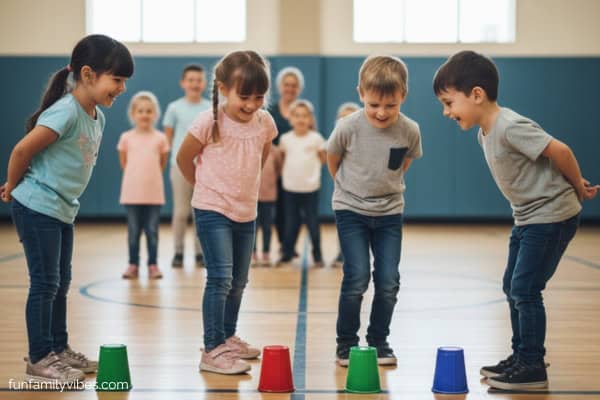
The Head, Shoulders, Knees, Cup game is a reaction-based game where players listen closely to a caller and perform actions as quickly as possible. When the caller finally says “cup,” players race to grab the cup before their opponent does.
Sounds simple, right? That’s what makes it brilliant.
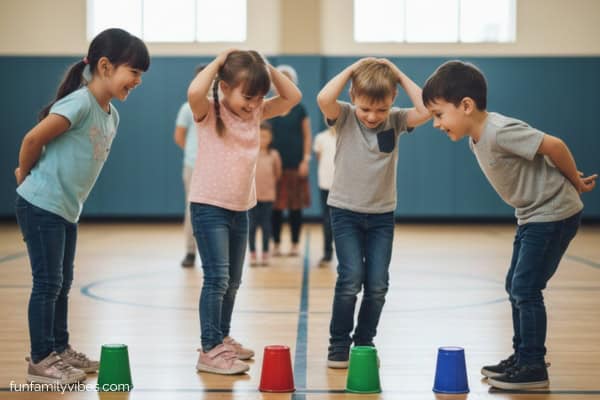
The challenge comes from the build-up. Players are instructed to touch different body parts, head, shoulders, knees, over and over again. Everyone is tense, waiting for the moment the word “cup” is called. When it finally happens, chaos erupts.
It’s part listening game, part reflex challenge, and part self-control test.
Why This Game Is So Popular
There’s a reason this game has stood the test of time and keeps popping up everywhere:
- No prep required
- Only needs one cup
- Works for almost any age
- Encourages focus and listening
- Gets people laughing fast
It’s also incredibly adaptable. You can play it one-on-one, in teams, as a tournament, or as a quick filler game when you have five spare minutes and a room full of restless kids.
What You Need to Play
One of the best things about the Head, Shoulders, Knees, Cup game is how minimal the supplies are.
Supplies:
- 1 plastic cup (per pair of players)
- 2 players (or more if playing tournament style)
- 1 caller or leader
- A flat surface (table, floor, or desk)
That’s it. No printables. No setup time. No mess.
How to Set Up the Game
- Place the cup upside down in the middle of the table (or floor).
- Have two players sit, stand or kneel opposite each other.
- Players should place their hands behind their backs or on their laps to start.
- Choose one person to be the caller (this can rotate).
Make sure both players can easily reach the cup and that it’s exactly in the center to keep things fair.
Basic Rules of the Head, Shoulders, Knees, Cup Game
Before you start, it helps to clearly explain the rules, especially if you’re playing with kids who get a little too enthusiastic.
The Rules:
- Players must only move when the caller gives an instruction.
- When a body part is called, players must touch that body part.
- Players cannot touch the cup until the word “cup” is said.
- If a player grabs the cup too early, they lose the round.
- The first player to grab the cup after it’s called wins the round.
Simple rules, but enforcing them makes the game even funnier (and fair).
How to Play Step-by-Step
Here’s exactly how a round works:
- The caller starts calling out body parts in any order:
- “Head”
- “Shoulders”
- “Knees”
- Players quickly touch the correct body part each time.
- The caller keeps going… sometimes slowly, sometimes quickly.
- At any moment, the caller suddenly says:
- “CUP!”
- Players race to grab the cup.
- The first person to grab it wins the round.
The unpredictability is what makes it so exciting. You can repeat body parts, speed things up, or pause dramatically to really build suspense.
How to Win (and Lose)
Winning is simple:
👉 Grab the cup first, after it’s called.
Losing can happen in two ways:
- You’re too slow.
- You grab the cup before it’s called.
Early grabbers usually get a loud “OHHHH!” from the crowd, which somehow makes the game even better.
Best Ages for This Game
One of the biggest strengths of this game is how versatile it is.
Preschoolers (with adjustments)
- Keep it slow.
- Stick to just “head” and “knees.”
- Focus on fun, not competition.
Elementary Kids
- Perfect age for this game.
- Great for birthday parties and classrooms.
- Helps with listening skills and impulse control.
Tweens and Teens
- This is where it really shines.
- Add speed, fake-outs, and pressure.
- Works great for youth groups and camps.
Adults
- Surprisingly competitive.
- Fantastic icebreaker.
- Even better with prizes or dares.
Fun Variations to Try
Once everyone knows the basics, mixing things up keeps the game fresh.
1. Tournament Style
- Winners move on.
- Losers are eliminated.
- Play until you have one champion.
This works especially well with large groups.
2. Team Cup Game
- Two teams line up.
- One player from each team faces off.
- Winning team earns a point.
Great for classrooms or party games.
3. Speed Round
- Caller speeds up instructions rapidly.
- No pauses.
- First to flinch usually loses.
4. Silent Caller
- Caller performs actions instead of speaking.
- Players must watch closely.
- Makes it much harder (and funnier).
5. Add More Body Parts
Try adding:
- Elbows
- Feet
- Ears
- Nose
Just make sure everyone understands the rules first.
Common Mistakes (and How to Avoid Them)
Even simple games can get messy without a little structure.
- Players hovering over the cup
→ Hands should be clearly on body parts. - Arguments about who grabbed first
→ Assign a referee or caller to decide. - Too much rough play
→ Remind players it’s a quick grab, not a tackle.
Setting expectations at the start keeps it fun for everyone.
Why This Game Is Actually Great for Kids
Besides being fun, this game sneaks in some real benefits:
- Improves listening skills
- Builds focus and attention
- Encourages self-control
- Promotes friendly competition
- Gets kids moving (even just a little!)
It’s one of those games that feels like pure chaos but is secretly very good for developing brains.
When to Use This Game
This game works in so many situations:
- Birthday parties
- School classrooms
- Youth groups
- Family game nights
- Rainy day boredom
- Camp activities
- Icebreakers
- Party filler games
Any time you need a quick win with minimal effort, this is it.
Tips for Running the Game Smoothly
After playing this game many, many times, here are a few pro tips:
- Use a plastic cup, not glass.
- Play on a non-slip surface if possible.
- Rotate callers to keep everyone involved.
- Add dramatic pauses to build excitement.
- Keep rounds short so everyone gets a turn.
And remember, enthusiasm from the caller makes a huge difference.
How Long Does a Game Take?
A single round can last 10–30 seconds, which makes it perfect for:
- Short attention spans
- Transition times
- Filler activities
You can play for 2 minutes or 20 minutes, depending on your group.
The Head, Shoulders, Knees, Cup game is popular for a reason. It’s simple, fast, affordable, and endlessly entertaining. You don’t need fancy equipment or complicated rules, just a cup, a little patience, and a group ready to laugh.
Whether you’re running a party, teaching a class, leading a youth group, or just trying to survive a rainy afternoon at home, this game is one to keep in your back pocket.